Flea and tick treatments in Jackson require a dual-stage protocol due to the 80-plus percent relative humidity and extended warm seasons found near the Pearl River basin and LeFleur's Bluff State Park. Surface sprays…
Flea and tick treatments in Jackson require a dual-stage protocol due to the 80-plus percent relative humidity and extended warm seasons found near the Pearl River basin and LeFleur's Bluff State Park. Surface sprays from retail stores degrade quickly in high heat and fail to penetrate deep thatch or sub-carpet fibers where flea pupae remain dormant. Professional eradication pairs an adulticide for immediate knockdown with a synthetic insect growth regulator such as pyriproxyfen, which prevents flea larvae from pupating and halts tick nymph development. Inside homes, targeted crack-and-crevice residual treatments eliminate fleas harboring in baseboards, upholstery seams, and pet bedding zones, requiring occupants and domestic animals to remain off treated surfaces for 2 to 4 hours until dry.
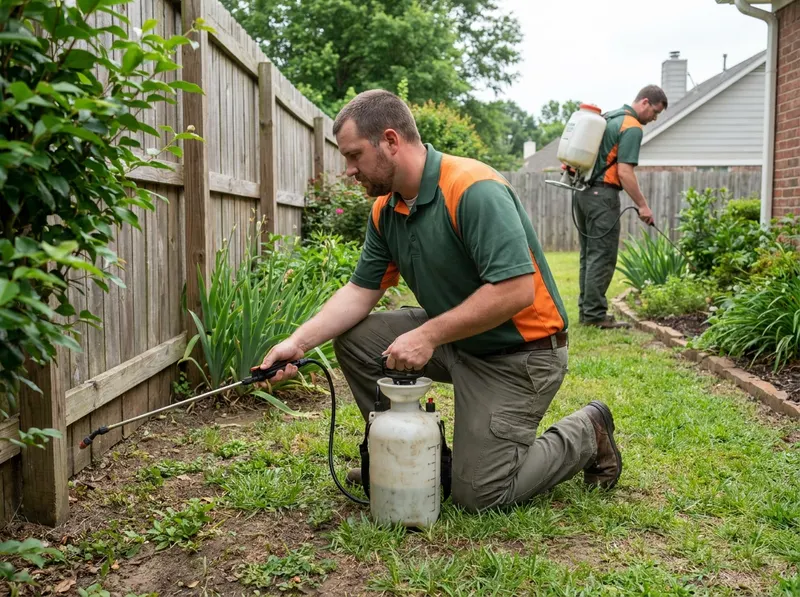
Exterior treatments focus heavily on the shaded macro-habitats common to mature neighborhoods such as Fondren, Belhaven, and Eastover. Ticks and flea larvae require moisture to survive and desiccate under direct sunlight; consequently, 90 percent of outdoor infestations establish in dense ground cover, crawl space perimeters, low-hanging shrubbery, and leaf litter lines beneath oaks and pines. In residential sectors like Alta Woods, Broadmoor, and Woodville Heights, high canine traffic along fence lines creates focal harboring zones that receive broad-spectrum liquid applications or water-activated granular barriers. The trade-off between granular barriers and liquid barrier misting involves penetration versus speed: liquid mists coat tall vegetation up to 3 feet high where questing ticks await hosts, while granular formulations filter through heavy pine straw to eliminate deep soil larvae.
Complete yard control requires clear property line management. Properties bordering dense timber near the Jackson State University area or commercial greenbelts in Downtown Jackson experience secondary flea and tick introductions from transient wildlife such as raccoons, opossums, and feral cats. A 10-foot perimeter buffer zone applied directly outside the manicured lawn creates a chemical boundary that prevents migrating parasites from reaching domestic play areas. A single treatment neutralizes the active population, but severe historical infestations often require an integrated booster application 14 to 21 days later to target newly emerged adults before they reach reproductive maturity.
Every job gets a firm, written price after a free on-site visit.
Tell us about your flea and tick treatments job in Jackson and we'll send a clear, written quote, usually the same day.
 Darmex Pest Specialists