Rodent control in central Mississippi demands physical architectural defense rather than repetitive chemical applications. Hinds County sits in an active alluvial basin where high seasonal water tables along the Pearl…
Rodent control in central Mississippi demands physical architectural defense rather than repetitive chemical applications. Hinds County sits in an active alluvial basin where high seasonal water tables along the Pearl River force Norway rats (*Rattus norvegicus*) into crawlspaces and basements. Simultaneously, roof rats (*Rattus rattus*) utilize mature oak canopies in historic neighborhoods like Belhaven and Fondren to leap directly onto roof decking, gaining access through unbacked louver vents and fascia gaps. Standard chemical baiting alone fails because indoor rodent mortality produces severe interior odor issues and fails to stop new foragers from entering through unsealed structural vulnerabilities.
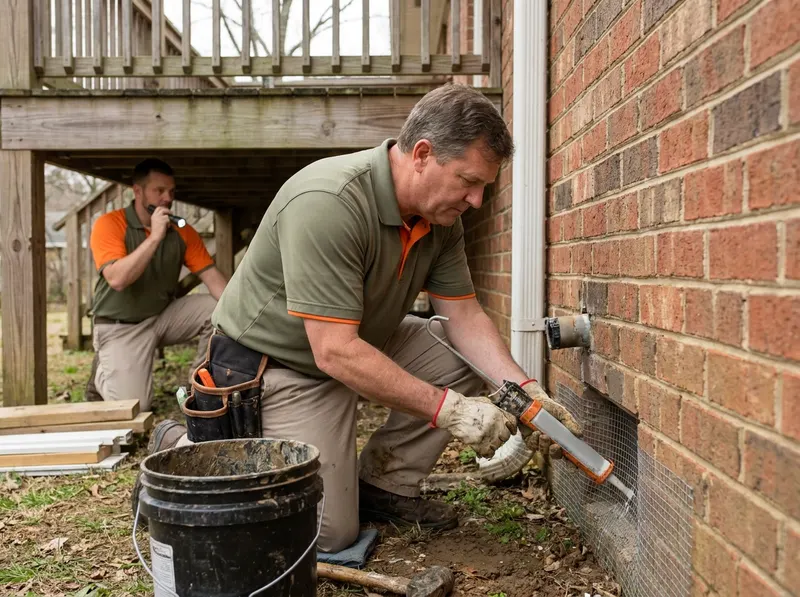
Effective rodent exclusion stops activity by sealing every entry aperture down to 0.25 inches using rust-resistant materials. Technicians secure crawlspace access doors, vent screens, and pipe penetrations with 16-gauge, quarter-inch galvanized hardware cloth, metal flashing, and steel-reinforced expanding sealant. In pier-and-beam properties throughout Alta Woods and Woodville Heights, exterior foundation perimeters require trench-installed hardware mesh buried 6 to 12 inches deep to prevent burrowing beneath subfloors. Attic inspections in Eastover and Broadmoor properties focus on ridge caps, soffit transitions, and plumbing vent stacks, where roof rats routinely chew through soft lead boots and degraded vinyl screening.
Indoor population elimination runs parallel to exterior fortification. Sealed, tamper-resistant mechanical snap-trap stations are deployed inside attics, crawlspaces, and interior utility chases to capture localized pests without introducing broadcast poisons near domestic pets or children. Heavy rodent infestations often leave compressed insulation, urine-soaked duct wrap, and chewed wiring behind, which presents serious fire and health hazards; partial exclusion plans leave these attic conduits vulnerable to secondary invasions. If a property displays exterior tree limbs within 4 feet of the roofline or unsealed foundation skirtings, structural exclusion provides the permanent barrier necessary to break the reproduction cycle, whereas interior trapping alone functions only as a temporary suppression measure.
Every job gets a firm, written price after a free on-site visit.
Tell us about your rodent exclusion and control job in Jackson and we'll send a clear, written quote, usually the same day.
 Darmex Pest Specialists