Mosquito suppression requires an environmental approach suited to the alluvial soil and persistent humidity of Hinds County. Jackson properties bordering the Pearl River basin, such as lots in Eastover and LeFleur…
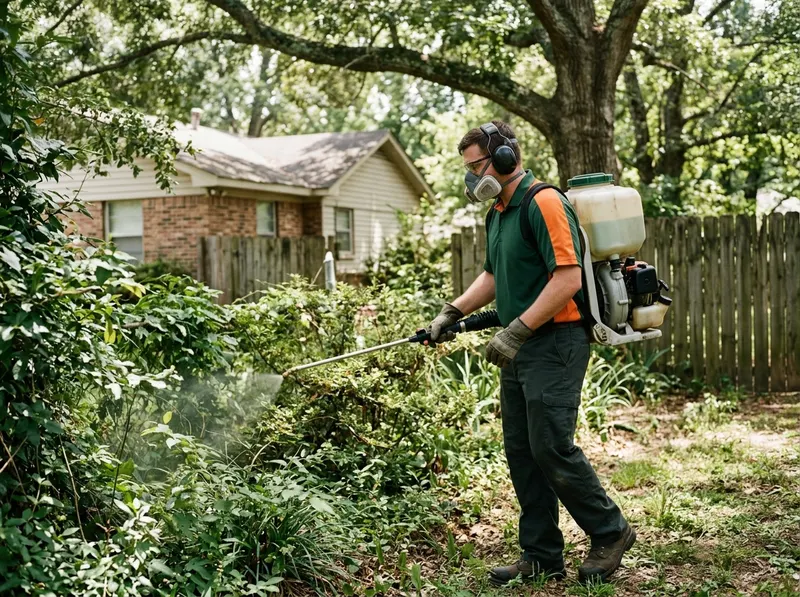
Mosquito suppression requires an environmental approach suited to the alluvial soil and persistent humidity of Hinds County. Jackson properties bordering the Pearl River basin, such as lots in Eastover and LeFleur Bluff, experience severe breeding cycles driven by warm, standing moisture. Generic store-bought foggers dissipate within hours because afternoon rain showers wash away non-bonded active ingredients. Professional residual suppression applies microencapsulated pyrethroids to the shaded undersides of broadleaf foliage, ivy beds, and covered porch perimeters where adult mosquitoes harbor during daylight hours. This protective barrier bonds to plant surfaces, maintaining knockdown efficacy for 21 to 30 days despite typical Mississippi summer deluges.
Effective intervention pairs adult knockdowns with biological larvicides to break the 7-to-10-day reproductive cycle. In historic neighborhoods like Fondren and Belhaven, mature tree canopies, aged gutter systems, and ornamental birdbaths create hidden incubators for Culex mosquitoes, known vectors of West Nile virus. Technicians treat non-draining catchment basins, low-lying landscape swales, and crawl space puddles with Bacillus thuringiensis israelensis (BTI), a targeted bacterium that disrupts mosquito larvae without affecting non-target wildlife, plants, or pets. Properties in Alta Woods, Broadmoor, and Woodville Heights with flat topography rely on this dual-layer strategy to stop emerging broods before they migrate to outdoor living areas.
Selecting between single-event suppression and recurring seasonal maintenance depends on yard topography and nearby water features. Single treatments suit outdoor gatherings near public spaces like Smith-Wills Stadium or the Eudora Welty House and Garden, creating a temporary knockdown envelope that lasts up to two weeks. However, residences facing perpetual migration pressure from heavily wooded ravines or poorly drained clay soils require consistent treatments spaced 21 days apart from April through October. The trade-off involves cost versus persistence: a single event treatment costs less initially but leaves properties unprotected when adjacent swarms re-invade three weeks later.
Every job gets a firm, written price after a free on-site visit.
Tell us about your mosquito suppression job in Jackson and we'll send a clear, written quote, usually the same day.
 Darmex Pest Specialists